
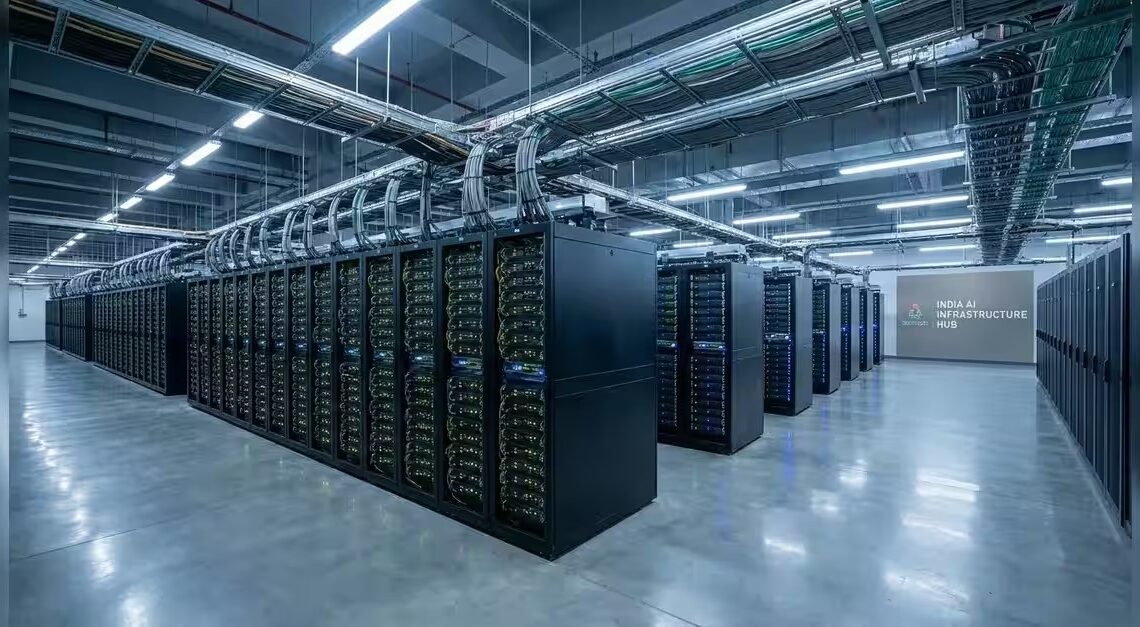
The next major investment story may not be found in the latest app, device, or software platform. It may be found in the buildings that make modern computing possible. Data centres have become essential infrastructure for cloud computing, artificial intelligence, streaming, online commerce, financial services, and countless other digital activities. As businesses and consumers generate more data, demand for computing capacity continues to reshape the infrastructure supporting the global economy.
The scale of this transformation is creating investment themes that extend well beyond traditional technology stocks. Building and operating data centres requires enormous quantities of electricity, advanced cooling systems, networking equipment, construction services, specialised real estate, and high-performance computing hardware. Understanding these connections can help investors see how the data centre boom is influencing several industries simultaneously.
AI Is Accelerating Demand for Computing Infrastructure
Artificial intelligence has added another powerful source of demand to an already expanding data centre industry. Training sophisticated AI models requires substantial computing resources, while running those models for millions of users requires continuing access to high-performance infrastructure. As companies incorporate AI into products, research, customer service, and internal operations, the underlying demand for computing capacity can grow alongside adoption.
This expansion also has physical consequences. Advanced processors generate considerable heat, making cooling an increasingly important consideration for data centre operators. Facilities must also have sufficient power, networking capacity, physical space, and reliability to support demanding workloads. The International Energy Agency has identified data centres and AI as important contributors to future electricity demand, highlighting the increasingly close relationship between digital technology and physical energy infrastructure.
For investors, this means the AI opportunity is not necessarily limited to companies developing AI software. The infrastructure supporting the technology can create opportunities across multiple industries. Semiconductor manufacturers, electrical equipment providers, utilities, data centre operators, and cooling specialists all participate in different parts of the ecosystem.
Power Is Becoming a Critical Part of the Data Centre Story
A data centre cannot operate without dependable electricity. As facilities become larger and computing workloads become more intensive, access to adequate power is becoming an increasingly important consideration when companies decide where to build new capacity. In some markets, grid availability can influence how quickly new facilities can be developed.
This creates potential investment themes across the energy and infrastructure sectors. Utilities may need to expand generation and transmission capacity, while companies involved in transformers, substations, electrical distribution, and grid modernisation can become part of the broader data centre supply chain. Different regions may rely on different combinations of natural gas, nuclear power, renewable energy, storage, and other generation technologies.
However, rising demand does not automatically translate into attractive returns for every company in the sector. Investors still need to examine capital spending, financing requirements, regulatory conditions, project timelines, and customer agreements. The important development is that electricity is becoming increasingly connected to the economics of digital infrastructure.
Data Centre Operators Are Bridging Technology and Real Estate
Data centres occupy a distinctive position because they combine elements of technology, real estate, and infrastructure. A suitable facility needs more than a physical building. It requires reliable electricity, high-speed connectivity, sophisticated cooling, security, and a location capable of supporting long-term operations.
Different operators have different strategies. Some focus heavily on large cloud providers, while others serve enterprises, telecommunications companies, or specialised computing customers. Their financial performance can therefore depend on factors such as occupancy, pricing, construction costs, financing conditions, and the pace at which new capacity comes online.
This makes individual-company research especially important. Investors looking at CLSK stock, for example, should consider the underlying business, its exposure to computing infrastructure, capital requirements, revenue sources, and broader market conditions rather than assuming that participation in a growing industry guarantees a particular investment outcome. A strong sector trend and the financial prospects of an individual company are related but not identical questions.
A Broader Investment Theme Is Taking Shape
The global data centre expansion illustrates how technological change can create economic consequences far beyond the technology sector. AI and cloud computing are increasing demand for physical facilities, while those facilities require power, cooling, connectivity, construction, and specialised equipment. The result is an interconnected investment landscape spanning several traditional industries.
For investors, this makes the data centre boom worth examining from multiple angles. Instead of focusing exclusively on the most recognisable technology companies, it can be useful to understand the entire infrastructure chain and identify where capital is being deployed. Different businesses will have different levels of exposure, financial strength, competitive advantages, and risk.
Conclusion: Infrastructure May Define the Next Phase of Digital Growth
The data centre boom represents a fundamental change in the infrastructure required to support the digital economy. Artificial intelligence and cloud computing may attract the headlines, but their continued expansion depends on physical systems capable of delivering enormous amounts of computing power reliably and efficiently.
For investors, the key lesson is to look beyond the headline trend. Data centres connect technology with energy, construction, real estate, networking, and industrial infrastructure, creating a range of potential investment themes. At the same time, capital requirements, valuations, technological change, and execution risks mean that careful company-level research remains essential.